Rumi’s Masnavi
A Guided Reading with Dr. Patrick J. D'Silva
Journey into the Masnavi, the masterpiece once called “the Qur’an in Persian,” and learn how scholars interpret its stories, teachings, and layers of meaning across centuries of tradition.
Enroll NowRead Rumi’s Masnavi with Sufism scholar Dr. Patrick J. D'Silva.
- Dates: Tuesdays, August 11th - September 22nd
- Time: 8:00-9:15 PM ET
How did a 13th century Muslim jurist in Anatolia become the best selling poet and poster boy for “universal mysticism” in 21st century America? This Guided Reading focuses on Jalalluddin Rumi, specifically the first volume of his most well-known work, the Masnavi Ma`navi (“Spiritual Couplets”), one of the most celebrated texts in the history of Islamic mysticism.
During his lifetime Rumi, was a treasured Sufi teacher within an expansive mystical tradition in Muslim communities around the world. After his death, his followers established the Mevlevi order (also known as the Whirling Dervishes), ensuring his legacy would be appreciated for centuries to come. Writing primarily in Persian, but also in Arabic, Rumi situated himself in a lineage of Muslim mystics such as Attar, Hallaj, and Rabia al-Adawiyya, eventually becoming perhaps the most famous Sufi poet in history.
Whether you’re an experienced reader of Rumi or someone who mostly knows him from Instagram quotes, this Guided Reading is for you. You’ll spend seven weeks with Dr. Patrick D’Silva, a scholar of Sufism, and a group of likeminded learners who want to peel back the many layers of meaning found in the Masnavi, as well as the complicated story of how its varying translations present different interpretations. As a class will read incredible poetry, learn about Rumi’s teachings on the power of love, and discuss why this message resonates so strongly with modern audiences today.
Enrollment Options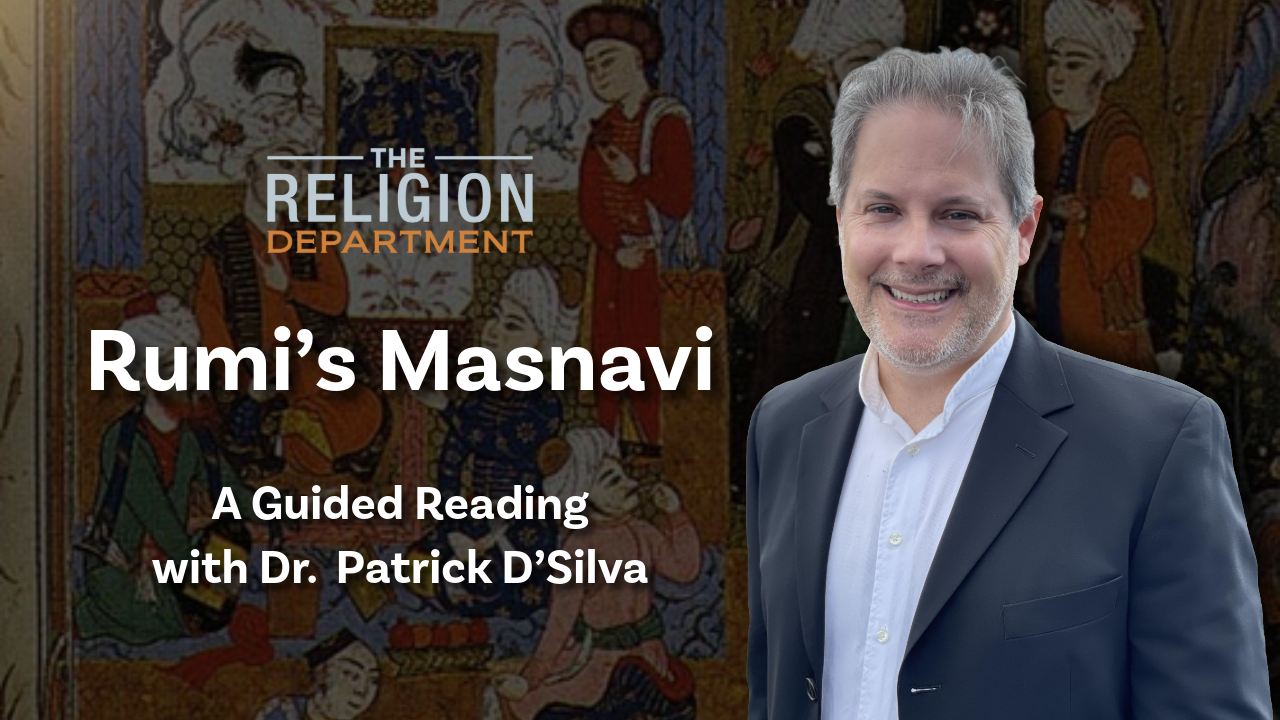
- Featuring:
- ✔ Seven 75-minute lectures (recorded live and instantly available)
- ✔ “Before You Read” Guides
- ✔ Ongoing Community Discussion
- ✔ Searchable Transcripts
- ✔ Lifetime Access in your Religion Department Library

A Guided reading brought to you by Religion for Breakfast
From Andrew Henry's 1M+ subscriber YouTube channel about the academic study of religion, the Religion Department connects world experts to a global learning community. Our classes are designed to accommodate multiple learning styles and schedules.

Who was Rumi, and why is the Masnavi important today?
Rumi was born in Balkh (in modern-day Afghanistan) in the thirteenth century before eventually settling in Konya, in present-day Turkey. He came from a scholarly family and became a jurist in the Hanafi school, one of the four main Sunni legal traditions. He also became a prominent Sufi teacher, with his students founding the Mevlevi Order (aka “Whirling Dirvishes”) that continues to this day.
Rumi was born in Balkh (in modern-day Afghanistan) in the thirteenth century before eventually settling in Konya, in present-day Turkey. He came from a scholarly family and became a jurist in the Hanafi school, one of the four main Sunni legal traditions. He also became a prominent Sufi teacher, founding the Mevlevi Order (aka “Whirling Dirvishes”) that continues to this day.
Rumi is presented today as a universal mystic, but it is difficult to fully understand his work without learning about his Muslimness. Students are often surprised to discover that the same writer celebrated for ecstatic poetry about Divine love likely spent much of his daily life adjudicating legal disputes!
The Masnavi, Rumi’s sprawling six-volume masterpiece, remains one of the most beloved spiritual classics in the world. It is treasured not only within Sufi communities, but also by readers broadly interested in mysticism, poetry, ethics, storytelling, and the spiritual life.
You’ve said that stories in the Masnavi often unfold in ways we don’t expect.
What are some examples?
One of the first stories we’ll read is “The Healing of the Sick Slave-Girl.” There is a king who falls in love with the maiden, but when she comes to the palace he discovers that she is in love with a goldsmith in her home town. He brings the goldsmith to her, and modern readers think he is being very selfless…until he orders the goldsmith killed!
One of the first stories we’ll read is “The Healing of the Sick Slave-Girl.” There is a king who falls in love with the maiden, but when she comes to the palace he discovers that she is in love with a goldsmith in her home town. He brings the goldsmith to her, and modern readers think he is being very selfless…until he orders the goldsmith killed!
By drawing on various commentaries, we’ll learn that each character symbolizes different aspects of love and attachment within spiritual life. Unpacking this story early on will train us to look for unexpected layers of meaning in subsequent stories. Like Sufi interpreters, we will approach the text on multiple levels at once.
My other favorite story is towards the end of the first book of the Masnavi (the volume that we’re reading). Ali, the cousin and son-in-law of the Prophet Muhammad, has defeated an enemy in battle and is about to dispatch him, when the enemy spits in his face. Instead of killing him, Ali drops his sword because he realizes that he is angry and can’t continue the battle while his ego-self is so prominent. The story brings up so much about how Sufi texts teach us about letting go of our nafs, that lower ego-self.
What can students expect from this Guided Reading?
We’ll learn more about the historical context of Rumi and his work, as well as his legacy. This includes learning about how Sufism (Islamic mysticism) developed from the early Muslim period through to Rumi’s time, through to today. We will compare and contrast different English translations to get a sense of how the Rumi we receive depends greatly on the filter imposed by each translator.
We’ll learn more about the historical context of Rumi and his work, as well as his legacy. This includes learning about how Sufism (Islamic mysticism) developed from the early Muslim period through to Rumi’s time, through to today. We will compare and contrast different English translations to get a sense of how the Rumi we receive depends greatly on the filter imposed by each translator.
Students will be well-prepared to continue studying the remaining five volumes of the Masnavi, Rumi’s other poetry, or moving on to read other Sufi writers from the premodern period.
Each live session features lecture and discussion, and are recorded for participants who can’t make it to the live sessions. All participants can also post questions on the course website and I will respond before the following session. My approach to teaching is to prioritize students’ questions, and use them to get to the most important concepts and readings.
Is there a certain edition of the text that students should use for this class?
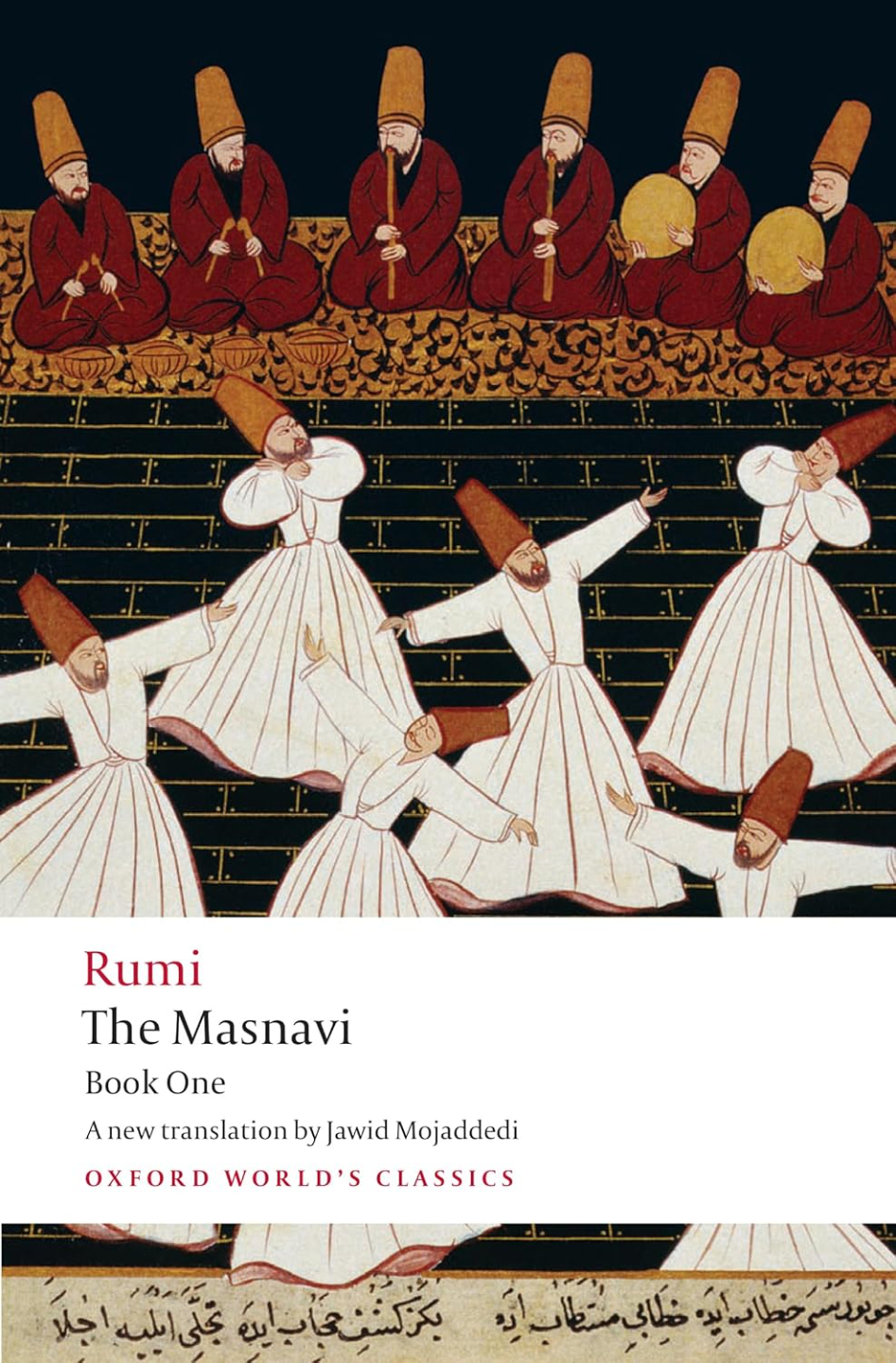
Yes! We will read this Oxford World Classics Edition of the text, which is widely considered to be the best translation.
Course Details

Experience Level
Open to all levels.
No prior background required!

Reading Pace
Comfortable

Interaction
Live sessions, or submit comments
and questions.
Reading Schedule
Week 1 - Introductions
Background on Sufism, Rumi’s World
Week 2 - Listen!
Prose Introduction, The Song of the Reed, The Healing of the Sick Slave-Girl
Week 3 - The Hare and the Lion
Masnavi
Week 4 - The Escape of the Merchant’s Parrot, The Old Harpist
Masnavi
Week 5 - The Poor Bedouin and His Wife
Masnavi
Week 6 - The Sufi Guide
Masnavi
Week 7 - Why Ali Dropped His Sword
Masnavi

Already a Member?
Login Here
Join Our Email List
Stay in the loop about upcoming lectures and department events
Unsubscribe at any time.