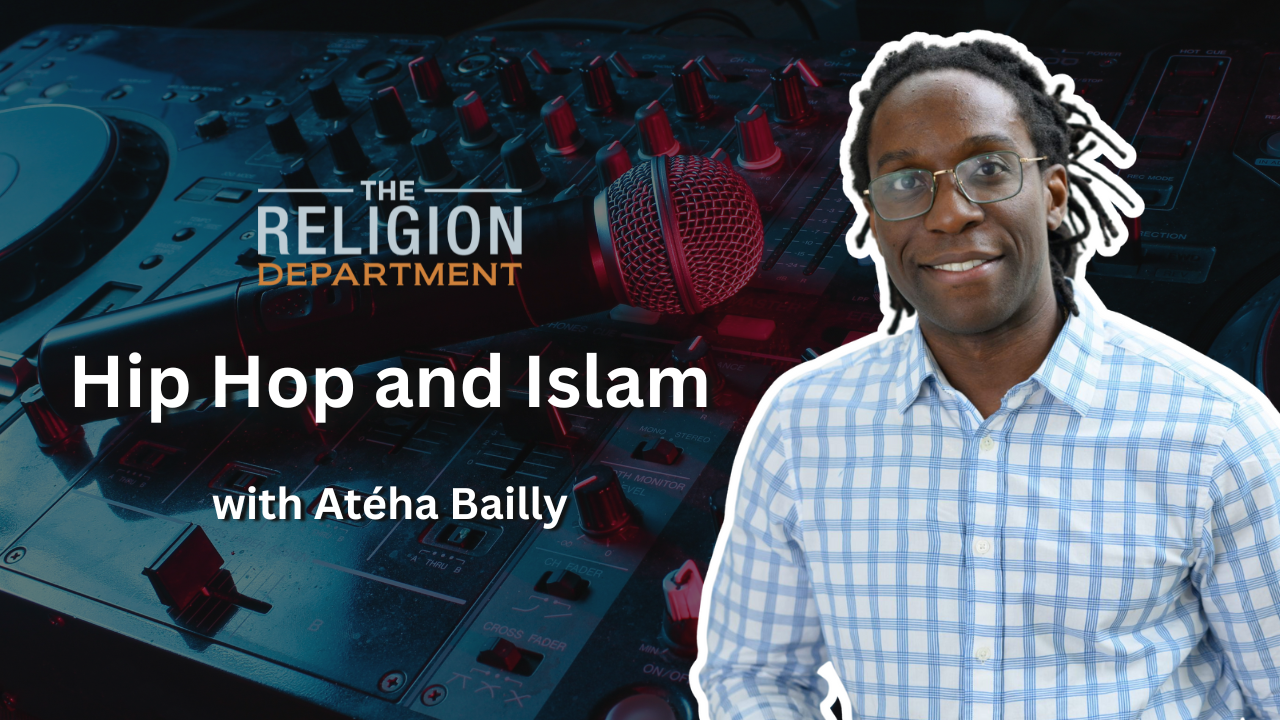
Thursdays, June 4th - 25th 8:00pm ET
What can hip hop teach us about faith, power, identity, and belonging in America?
Hip Hop and Islam explores the intertwined histories of hip hop, the African diaspora, and Islam in the United States. Blending music history, religious studies, and cultural criticism, the series examines how hip hop has served as a space where racially and religiously marginalized communities assert identity, challenge power, and imagine alternative futures.
Beginning with the transatlantic slave trade and the presence of enslaved African Muslims in the Americas, the project traces how Islam and Blackness have long functioned as contested categories in American life. It moves through the rise of Black Muslim movements, the birth of hip hop in the Bronx, the commercialization of rap in the 1990s, and the shifting in the post 9/11, internet driven cultural terrrIain—asking how artists navigate visibility, vulnerability, profit, and faith.
At its core, the series argues that hip hop is more than music. Its hip hop music, and its associated culture, through aesthetics and form, has become an effective mode of theorizing belonging and creating community across time, space, and cultures.
Drawing from Africana Religious Studies—while remaining accessible to broad audiences—the project pairs close readings of songs with historical context and critical theory. It foregrounds artists who have used Islamic language, symbolism, and ethics to critique state violence, capitalism, racism, and surveillance, while also grappling with the tensions of commercialization and respectability politics.
In this course, participants will explore questions like:
-
How have Islam and Blackness functioned as contested categories in American history?
-
In what ways has hip hop created space for racially and religiously marginalized communities to assert identity and challenge power?
-
How have artists used Islamic language, symbolism, and ethics to critique state violence, capitalism, racism, and surveillance?
-
What tensions emerge between faith, commercialization, visibility, and respectability politics in hip hop culture?
About Atéha Bailly:
Atéha Bailly is a scholar and musician living in Massachusetts. His studies in religion at Reed College and the Harvard Divinity School focused on the cultural and political implications of music in communities centered around musical practices and/or sub-cultural aesthetics. Specifically, his research has focused on these aspects of music in Islam, Rastafari, and Ananda Marga.
About the Religion Department:
Coming soon from Religion for Breakfast, the Religion Department is an online school where anyone can learn from leading scholars of religion. Click below to be the first to hear about upcoming classes and events.

Join Our Email List
Stay in the loop about upcoming lectures and department events
Unsubscribe at any time.